

History of the Annie Taylor Dee School of Nursing
Weber State University’s Annie Taylor Dee School of Nursing, which celebrated its 70th anniversary in 2023, is proud to be part of a long and honorable legacy of excellence in nursing education. WSU’s nursing program started following the end of World War II. Compounding the effects of the war on the civilian pool of registered nurses, the United States found itself embroiled in the North Korean conflict. These factors contributed to the gravest nursing shortage of modern history.
Mildred Montag, a doctoral student at Teacher’s College and Director of Adelphi College’s Annie Taylor Dee School of Nursing, designed and proposed an associate’s degree in nursing (ADN) model as an alternative to the two existing educational models for nurses. She posited that both the three-year hospital-based diplomas and four-year university-based bachelor’s degrees (BSN) were excessively time-intensive, and she proposed that a two-year college-based associate’s degree program would be a time-efficient and realistic alternative for educating technical registered nurses.
With funding support from the W.K. Kellogg Foundation, Montag designed and implemented a research project in which seven community colleges throughout the United States would be selected to implement research pilot programs for a revolutionary associate’s degree model for nursing education.
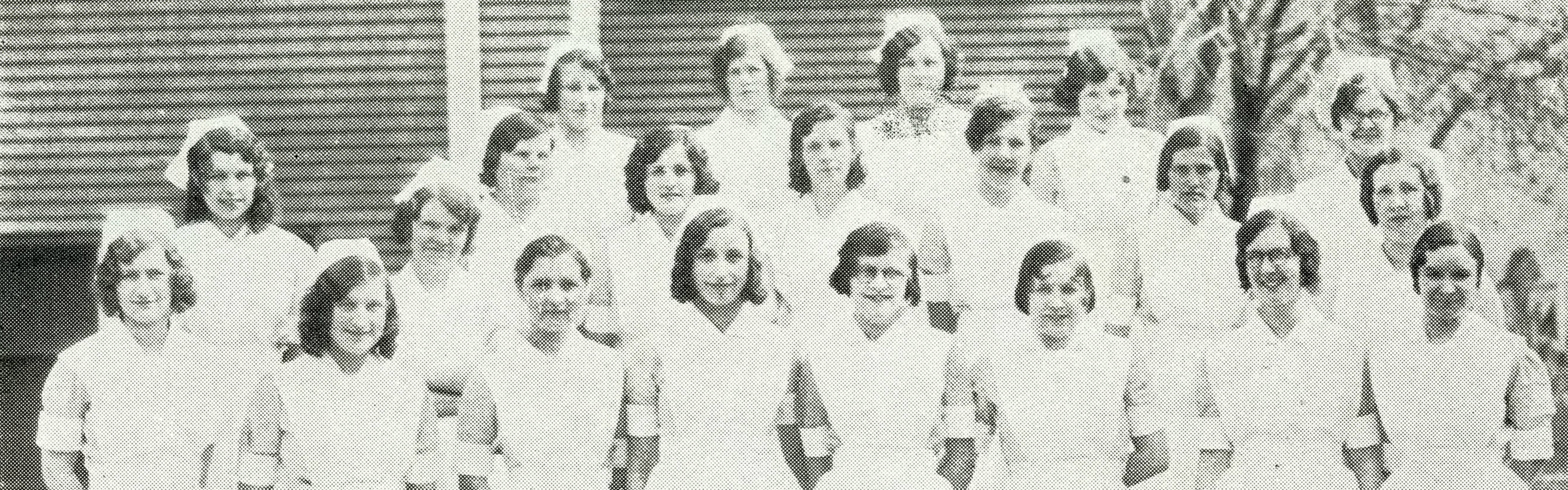
In 1953, Weber State College (now WSU), located in downtown Ogden, Utah, was selected to host one of the seven pilot Montag ADN programs. Thirty-six enthusiastic and courageous young women, supported by an equally courageous faculty, became WSU’s first class of associate’s degree in nursing students.
This new and unproven model for educating nurses was met with significant resistance and concern by Ogden’s nursing and medical communities. Ruth Swenson, Registered Nurse (RN), served as the first director of the program. Working closely with community leaders, health care facilities, nurses, and physicians, Swenson and the program faculty overcame the concerns. The success of the students soon won support for the new nursing program.
WSU’s associate nursing program was first accredited in 1966 by the Accreditation Commission for Education in Nursing, or ACEN (then called the National League for Nursing Accrediting Commission, or NLNAC).
WSU’s nursing faculty, with the leadership of Ruth Swenson, Leola Davidson, Gerry Hansen, Debra Huber, Catherine Earl, Susan Thornock, Sally Cantwell, Rieneke Holman, and, most recently, Tamara Berghout, has developed a nationally recognized nursing education program. WSU’s program has implemented an effective “career-ladder” approach to nursing education, and a respected and successful distance and innovative Internet-based delivery model for ADN, RN to BSN, Master of Science in Nursing (MSN), and Doctor of Nursing Practice (DNP) education. Thousands of men and women who have graduated from WSU’s Annie Taylor Dee School of Nursing have gone on to serve as registered nurses, nurse educators, nurse leaders, and nurse practitioners in their communities.
The WSU nursing program is proud to have had the opportunity to serve as the 1971 Utah Board of Regents-designated provider of ADN Nursing Education in the State System of Higher Education. As a result of this mandate, associate’s degree nursing programs have been offered by WSU at cooperative campuses located throughout the state. Programs were offered at Utah State University in Logan, Salt Lake Community College (SLCC) in Salt Lake City, Southern Utah University (SUU) in Cedar City, and Dixie State College in St. George.
In continuing fulfillment of this early mandate, WSU nursing outreach programs continued to be offered throughout Utah’s rural communities, including Tooele, Richfield, Roosevelt/Vernal, Payson, Price, Delta, and Panguitch. The health and well-being of Utah’s urban and rural communities have benefited from the invaluable service provided by WSU’s nursing graduates. This contribution to our state is a source of pride for WSU’s nursing program, both today and in the future.
The Annie Taylor Dee School of Nursing currently partners with technical colleges in Northern Utah through our 2-semester PN to RN program. These mutually beneficial partnerships allow the Annie Taylor Dee School of Nursing to house faculty and students on these campuses.
Despite early voices of concern and dismay, the college and university-based associate’s degree model for nursing education has been a tremendous success, growing from seven pilot programs in 1953 to more than 900 programs throughout the U.S. today. The Annie Taylor Dee School of Nursing is also proud to be the home of the first (and only) doctoral program at Weber State University.
Displaying the spirit of those 1953 faculty and students, current faculty and students are ready to embrace the challenges facing today’s nursing professionals. WSU’s Annie Taylor Dee School of Nursing continues to be as committed to serving Utah’s nursing education needs.