

Why the WSU PA Program?
Welcome to the Department of Physician Assistant Medicine at Weber State University! Whether you're just beginning to explore a career as a PA or you're ready to take the next step, we’re happy you’re here and excited to share what makes our program unique.
Our 24-month program is designed to meet the needs of today’s evolving healthcare landscape and the growing demand for well-rounded, clinically skilled providers. With extensive training in primary care and hospital internal medicine, our experiential, immersive curriculum will prepare you to step confidently into any area of healthcare.
Beyond the curriculum, you will discover an educational environment dedicated to fostering growth, nurturing intellectual curiosity, and facilitating personal development. Our commitment to excellence, innovation, and compassionate patient-centered care is unwavering and is at the foundation of everything we do. We’re proud of the program we’ve built, and invite you to learn more about what makes the WSU PA program an exceptional place to begin your medical career.
What makes us unique?
 Our small cohort of 20 students fosters a sense of community and enhances opportunities for classroom participation and collaborative learning. A small faculty-to-student ratio creates a strong rapport and provides students with personalized attention.
The program has a unique dual emphasis on primary care and inpatient hospital internal medicine. As part of their clinical training, students complete a 3-month primary care rotation and a 3-month inpatient hospital medicine rotation. In addition, students complete 4-week emergency medicine and surgical rotations, and a 4-week elective rotation in an internal medicine subspecialty.

The program employs cooperative learning and instructional methods to amplify student engagement and the overall quality of learning. Teaching strategies include:
-
Inquiry-based learning
-
Team-based learning
-
Problem-based case studies

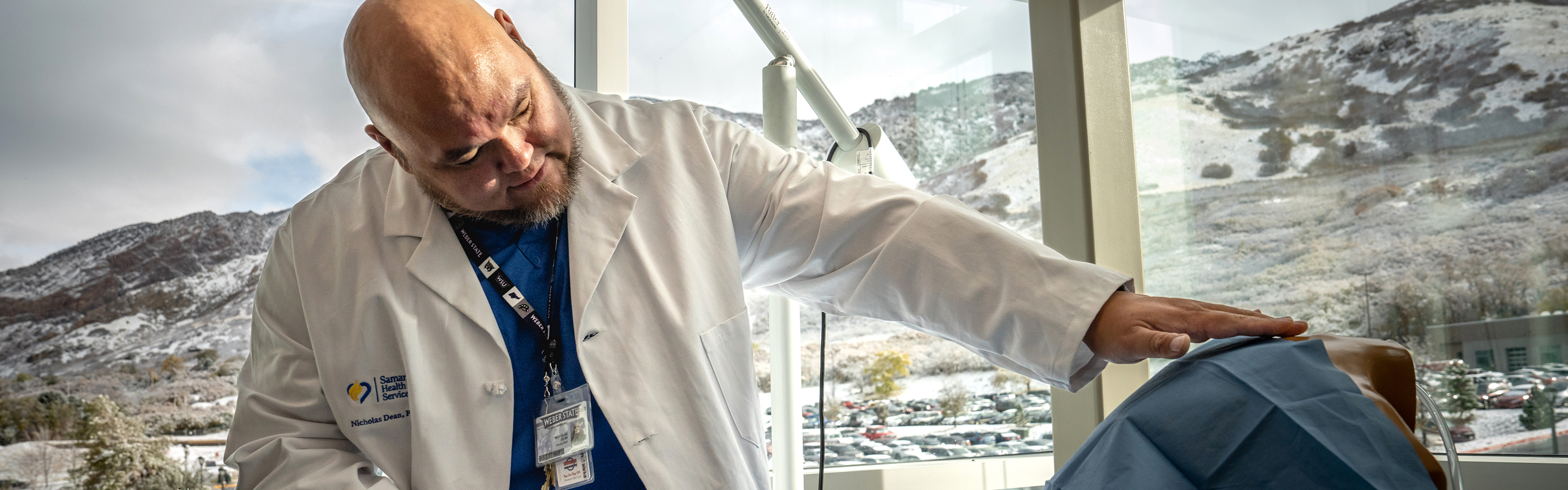
The program is housed in a beautiful facility with abundant natural light and scenic views of the Wasatch mountains. The building has two dedicated classrooms, a dedicated, state-of-the-art clinical skills lab that features five outpatient exam rooms, a hospital room, and a control room equipped with advanced simulation technology. Four debriefing rooms support small-group observation, feedback, and discussion, serving as flexible spaces for learning and study. Students have a dedicated lounge space and access to the building 24/7.

Affordable tuition and fees. We understand that graduate school is a major financial decision. Our tuition and fees are competitive with other physician assistant programs, and we work to provide real value through a strong educational experience. Financial aid, scholarships, and flexible payment plans are available to help make the program more accessible.

Our passionate and dedicated faculty and staff are committed to student success. With over 60 years of combined clinical experience, our faculty bring practical knowledge and informed perspectives that provide students with valuable insights and support a comprehensive, well-rounded medical education.

From the first semester, students engage in weekly simulated medical training scenarios that facilitate the transition from learning and understanding the science of medicine to analyzing, interpreting, and applying medical information within the context of complex patients with multiple comorbidities and social issues. By working in small groups, students improve interpersonal and communication skills and learn to collaborate effectively as compassionate members of the healthcare team.
Our 24-month program is designed to equip students with the comprehensive medical knowledge, clinical training, and professional skills needed to excel as physician assistants. While many PA programs span 27 months or longer, our efficient format allows students to complete their education in just two years—supporting a faster transition from the classroom to clinical practice and enabling earlier entry into the workforce.

End-of-semester comprehensive summative exams help students solidify their knowledge, reinforce the acquisition of program competencies, and enhance readiness for clinical training and the PANCE exam. These assessments also provide valuable feedback on academic progress, identify areas for improvement, and ensure students are meeting the rigorous standards required for professional practice.
Our comprehensive POCUS curriculum provides each student with a Butterfly Ultrasound probe for hands-on training throughout the program, both in class and during clinical rotations. This practical experience builds confidence and proficiency, giving graduates a competitive edge in emergency medicine, primary care, and hospital medicine. At Weber State, students gain advanced diagnostic skills that elevate patient care and set them apart in the field.

The majority of our clinical rotations are located within the surrounding local region. However, for students assigned to out-of-state rotation sites, the program provides a stipend to help offset the cost of temporary housing. This support is intended to ease the financial burden and ensure students can focus on gaining valuable clinical experience, regardless of location.