


Academic Overview
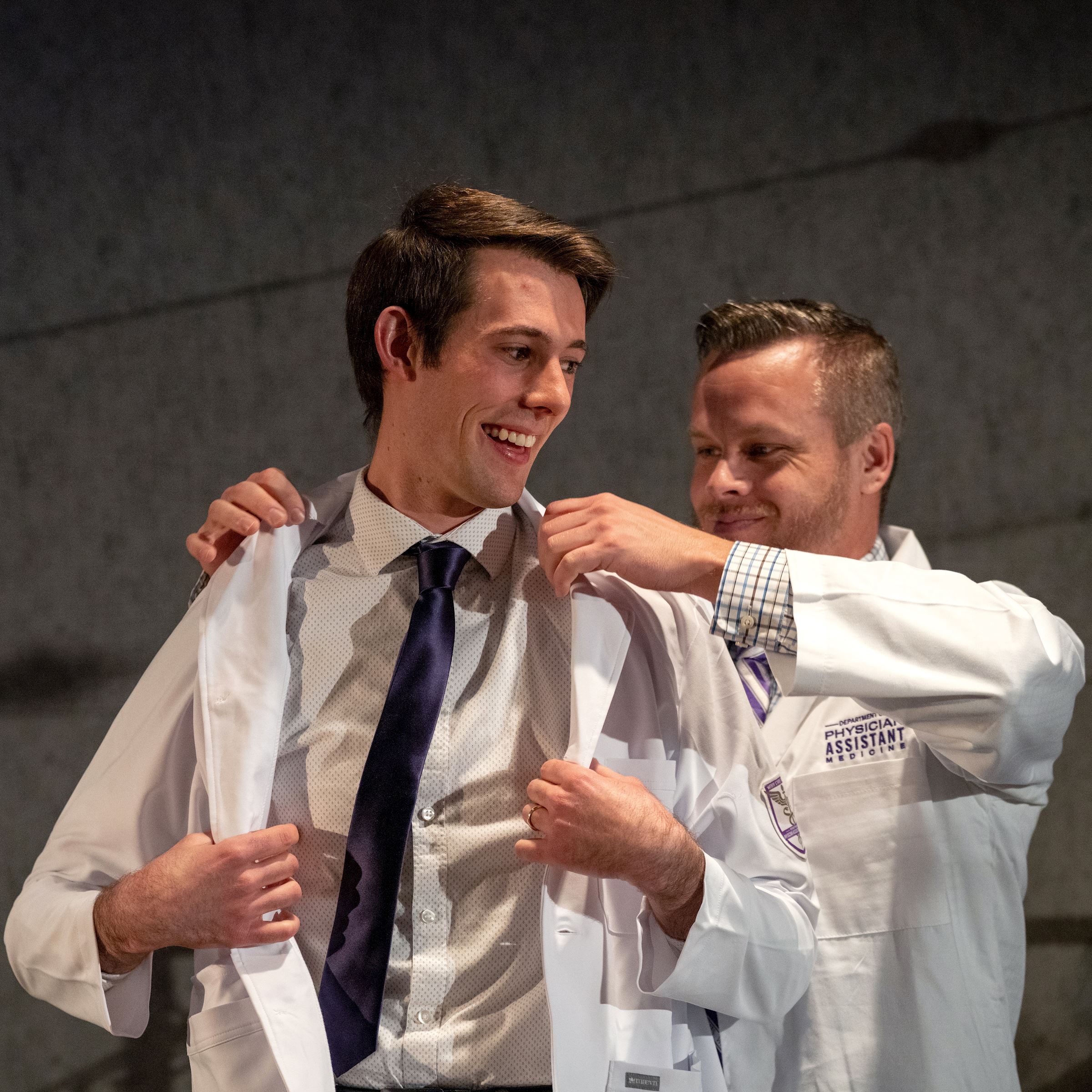
The Weber State University (WSU) Physician Assistant Program is a two-year, full-time, intensive graduate-level program that trains individuals with clinical experience and a strong academic background to become physician assistants and leaders in the field of medicine.
The curriculum is integrated and experiential, providing an innovative structure that helps students move from learning, understanding and applying the science of medicine to analyzing and integrating medical information in the context of complex patients with multiple comorbidities. Students who complete 105 credit hours, as well as Summative Competency Assessments, are eligible for graduation.
Upon graduation, students become eligible for board certification by the National Commission on the Certification of Physician Assistants (NCCPA) and can sit for the Physician Assistant National Certification Exam (PANCE). Once certified, Physician Assistants can apply for a medical license in all 50 states and the District of Columbia.
Curriculum
Didactic courses are taught using a systems-based approach that helps students achieve clinical acumen by creating meaningful applications between biomedical science, clinical science, pharmacotherapy and professional practice.
The content integrates various teaching methods, including lectures, labs, problem-based, team-based, and inquiry-based learning, simulation, interprofessional activities, evidence-based practice, and community engagement.
After successfully completing didactic training, students begin Supervised Clinical Practice Experiences (SCPEs) in their second year. This involves various clinical settings in multiple medical disciplines under the supervision of a clinical preceptor. In direct patient care environments, students expand and apply basic medical knowledge, practice clinical and technical skills, and participate in the team-based practice of medicine.
Only students admitted to the WSU PA Program can take courses within the department. The curriculum is sequential, meaning students must complete the program by passing each exam and course before progressing to subsequent classes and semesters.
Before you apply, understand what our program looks like over the 24-month duration:
Catalog: Full Program Curriculum
Year One
- Semester 1 (22 total credit hours)
- Semester 2 (21 total credit hours)
- Semester 3 (19 total credit hours)
Year Two
Program Competencies
The WSU Physician Assistant Program has adopted the following Program Competencies, which align with competencies outlined by the NCCPA, the ARC-PA, and the AAMC *. Students are evaluated on these competencies throughout the program and are expected to demonstrate proficiency prior to graduation.
Competencies required to achieve EPAs:
1. Medical Knowledge (MK):
Demonstrate knowledge of established and evolving biomedical, clinical, epidemiological, and social-behavioral sciences and apply this knowledge to patient care.
2. Interpersonal and Communication Skills (ICS):
Demonstrate effective interpersonal and communication skills (written, oral, and nonverbal), that facilitate the exchange of information and collaboration with patients, families, healthcare team members, and the public.
3. Clinical and Technical Skills (CTS):
Demonstrate the ability to safely and effectively perform clinical and technical skills required of an entry-level physician assistant, using appropriate technique, infection control principles, medical equipment, and supervision when indicated.
4. Professionalism and Professional Development (PPD):
Demonstrate profressionalism by upholding ethical principles, maintaining appropriate behavior and commuication, respecting patient autonomy and confidentiality, and fulfilling professional responsibilities in clinicl practice.
5. Clinical Reasoning and Problem Solving Ability (CRPS):
Demonstrate the ability to synthesize patient information and diagnostic data to develop and priorotize differential diagnoses, and formulate appropraite diagnostic and management plans.
6. Interprofessional Collaboration (IPC):
Demonstrate the ability to collaborate as a member of an interprofessional team to optimize safe, effective patient and population-centered care.
7. Practice-based Learning and Quality Improvement (PBLQI):
Demonstrate the ability to evaluate patient care, appraise scientific evidence, engage in self-directed learning, and apply quality improvement principles to enhance patient care.
* NCCPA – National Commission on Certification of Physician Assistants
ARC-PA – Accreditation Review Commission on Education for the Physician Assistant
AAMC – Association of American Medical Colleges
Entrustable Professional Activities (EPAs)
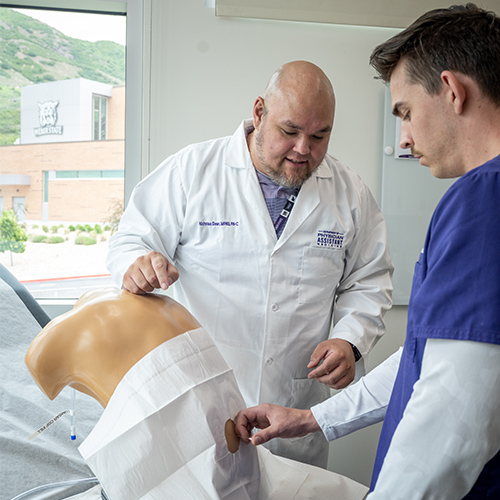
Entrustable Professional Activities (EPAs) are the observable and measurable professional activities a PA must be competent to perform upon entry into professional clinical practice. Upon completion of the program, WSU physician assistant students can be entrusted to:
EPA 1
Obtain thorough medical histories and interpret findings.
EPA 2
Perform technically proficient physical exams and interpret findings.
EPA 3
Prioritize a differential diagnosis following the collection of medical history and exam data.
EPA 4
Select and interpret appropriate diagnostic and screening tests.
EPA 5
Synthesize clinical information and diagnostic findings to determine the most likely diagnosis.
Manage patients in a clinical setting.
EPA 7
Identify patients requiring a higher level of care and initiate appropriate evaluation and intervention.
EPA 8
Perform basic technical skills as indicated during the course of patient care.
EPA 9
Document and present clinical encounters.
EPA 10
Collaborate as a member of an interprofessional team.
EPA 11
Contribute to a culture of high-reliability care (e.g., safety and quality).
EPA 12
Demonstrate professionalism in a clinical setting.