

Therapeutic Dance Certificate
The Certificate of Proficiency in Therapeutic Dance is an interdisciplinary, 27-credit program that integrates dance, education, gerontology, health, nutrition, psychology, and rehabilitation sciences. The program prepares students to facilitate safe, inclusive, and evidence-informed dance and movement experiences that support physical, cognitive, emotional, and social well-being across the lifespan.
Students connect this interdisciplinary knowledge with dance technique, kinesiology, improvisation, pedagogy, and community-based practices. Through applied coursework and community-engaged learning, students develop skills in lesson planning, movement adaptation, inclusive teaching, creative facilitation, music and rhythm integration, participant observation, professional communication, cultural humility, and trauma-informed practice.
Students learn to design movement experiences for older adults, individuals with disabilities, children and adolescents, and people living with Parkinson’s disease, dementia, stroke, traumatic brain injury, and other neurological or mobility-related conditions.
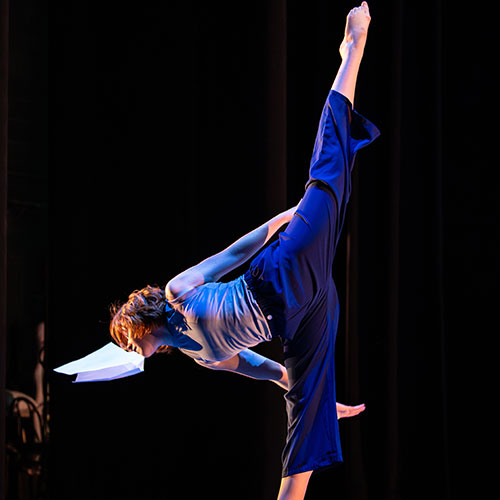
"Being a part of the Weber State Dance Area was the best decision I could have made in my academic career. This program taught me how to develop my personal artistry, increase technical capabilities, and further my appreciation for all styles of movement. The community between the students, faculty, and staff, was incredibly supportive and inspiring and I always knew, and still know, that I have individuals to turn to with regards to my future choreographic, performative, and academic endeavors."
Mallory Valenzuela
Bachelor of Arts in Dance Performance
Career Options
Graduates may pursue employment or complementary professional opportunities in senior living and memory-care communities, rehabilitation facilities, hospitals and wellness programs, community health organizations, disability service agencies, youth residential programs, recreation centers, nonprofit organizations, and adaptive or inclusive dance programs. Potential roles include therapeutic dance practitioner, adaptive dance instructor, creative-aging teaching artist, community arts educator, movement and wellness facilitator, recreation specialist, and Arts in Health program coordinator.
The certificate can also provide interdisciplinary preparation for graduate study in dance/movement therapy, Arts in Health, gerontology, rehabilitation, and related fields. Because admission and prerequisite requirements vary among graduate programs, students interested in becoming credentialed dance/movement therapists should consult prospective programs and professional organizations when planning their continued education. The certificate itself does not qualify graduates as dance/movement therapists or replace clinical licensure.
For more information, contact Dr. Juan Carlos Claudio at juanclaudio@weber.edu.
Career + Graduate Pathways
A certificate that supports multiple disciplines
The certificate supports students across multiple disciplines as they prepare for career paths that engage and serve older adults and people of varied ages and abilities.
-
Gerontology
Turn knowledge of aging into adaptable, engaging movement practice.
-
Education
Design inclusive, developmentally responsive learning through movement.
-
Dance
Expand artistry and pedagogy into community, clinical, and aging-related settings.
-
Neuroscience + Psychology
Explore movement, cognition, attention, memory. emotion, and neuroplasticity.
-
Health + Rehabilitation
Connect prevention, function, quality of life, and person-centered care.
-
Social Work + Human Services
Strengthen relational, creative, and community-based approaches to well-being.
Career and graduate pathways
The certificate can complement work in senior living, memory care, rehabilitation, hospitals and wellness programs, community health, recreation, disability services, nonprofit organizations, Arts in Health, and adaptive dance. Potential roles include therapeutic dance practitioner, adaptive dance instructor, creative-aging teaching artist, community arts educator, movement and wellness facilitator, recreation specialist, and Arts in Health program coordinator.
It may also support preparation for graduate study in dance/movement therapy, Arts in Health, gerontology, rehabilitation, and related fields.
WHY THIS CERTIFICATE + WHY NOW
The future is again.
Our communities need professionals who understand movement, cognition, inclusion, and other adulthood.
- 80
The oldest Baby Boomers turn 80 in 2026.
U.S. Census Bureau - 61.2M
Americans were age 65+ in 2024.
U.S. Census Bureau - ~3×
Projected growth of the 85+ population, 2020-2060.
U.S. Census Bureau
WHAT THE RESEARCH SUGGESTS
Dance supports whole-person well-being.
A 2025 systematic review of 22 studies found that dance-based interventions may support physical function, cognition, emotional health, and social connection in older adults. Dance is a promising, accessible, and potentially low-cost strategy for healthy aging; larger, more rigorous studies are still needed.
EXPLORE
THE WSU
CATALOG
IMPORTANT CLARIFICATION
The certificate does not qualify graduates as dance/movement therapists or replace professional certification or clinical licensure. Admission and prerequisite requirements vary among graduate programs.
Questions?
Dr. Juan Carlos Claudio
juanclaudio@weber.edu