

Faculty and Staff
Find faculty and staff information for the Department of Anthropology, Geography & Sociology. Have a general question? Contact our department.
Anthropology Faculty
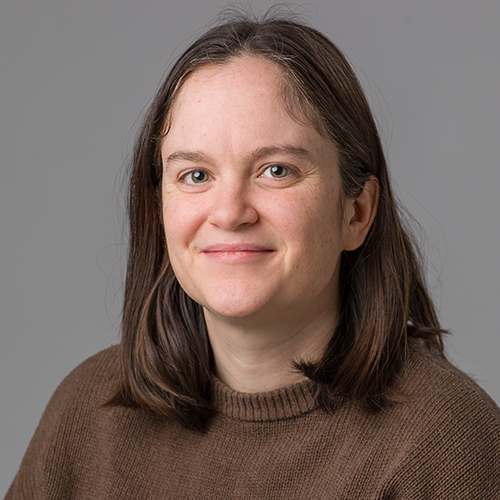
Kasey Cole
Assistant Professor
PhD, Anthropology, University of Utah, 2023
MA, Anthropology, California State University, Chico, 2017
BA, Anthropology, California State University, Fullerton, 2013
Kasey Cole is an archaeologist with more specialized expertise in zooarchaeology and paleoecology. Her research focuses on understanding the impacts of Holocene climate change on the spatial-temporal distribution of animal communities to assess how these dynamic interactions influenced past human behavior, including dietary change, settlement patterns, inequality, territoriality, and the persistence of long-term socio-environmental systems (SES) in western North America.
Emerging from this research are conservation and sustainability projects leveraging paleozoological and climate data to inform future wildlife management and Indigenous partnerships to help restore Indigenous SES. Her work is interdisciplinary, incorporating theory and methods from anthropology, ecology, geology, and climate and environmental sciences.
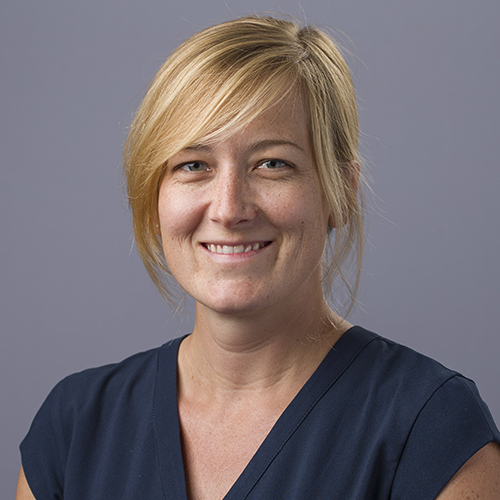
Joanna Gautney
Assistant Professor of Anthropology
PhD, Biological Anthropology, Tulane University, 2016
MA, Biological Anthropology, Tulane University, 2012
BA, Anthropology, California State University, Sacramento, 2007
Joanna Gautney is a biological anthropologist specializing in paleoanthropology. Her primary research focuses on the phylogenetic relationships between fossil hominin species, and the role interspecific hybridization may have played in human evolutionary history. Other areas of interest include paleoecology, paleodemography, and climate change during the late Pleistocene, and their role in recent human evolution and dispersal.

Mark Stevenson
Department Chair
Associate Professor
Lindquist Hall 241
801-626-6244
mstevenson1@weber.edu
Mark Stevenson
Associate Professor of Anthropology
PhD, Anthropology, Temple University, 1996
BA, Anthropology & Political Science, State University of New York College at Oneonta, 1984
In addition to introductory courses (Peoples & Cultures of the World, Language & Culture), Dr. Stevenson teaches the required Research Methods and Senior Capstone courses, as well as a variety of electives, including courses on the cultures of contemporary Europe, culture and climate, post-socialism in Eastern Europe, globalization, political and economic anthropology. He has also led numerous study abroad courses to Europe and China. Dr. Stevenson has conducted ethnographic fieldwork in Ireland and Germany, including studies of the process of German unification in public broadcasting and film institutions and of the intersection of labor market policies, education reform and professionalization in the non-profit arts sector.
His research projects and interests include:
- Professionalization and the influence of social media in Irish traditional music
- Sustainability in the business and non-profit sectors
- Climate change and energy transition
- Cultural heritage, cultural policy and tourism
- Anthropology of work
- Anthropology of education
- Environmental anthropology
- Visual anthropology
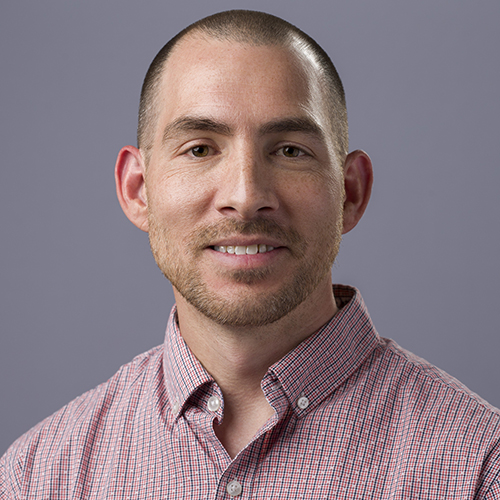
David Yoder
Associate Professor of Anthropology
PhD, Anthropology, University of Nevada, Las Vegas, 2009
MA, Anthropology, Brigham Young University, 2005
BS, Anthropology/History, Weber State University, 2003
David Yoder is an archaeologist who focuses on the prehistory of the Great Basin and Colorado Plateau of North America. His primary areas of research include Fremont societies, the Paleoarchaic to Early Archaic Transition, archaeometry, and cultural resource management (CRM). Outside of the university system, Dr. Yoder’s career has included positions in state government and private sector CRM.
Geography Faculty
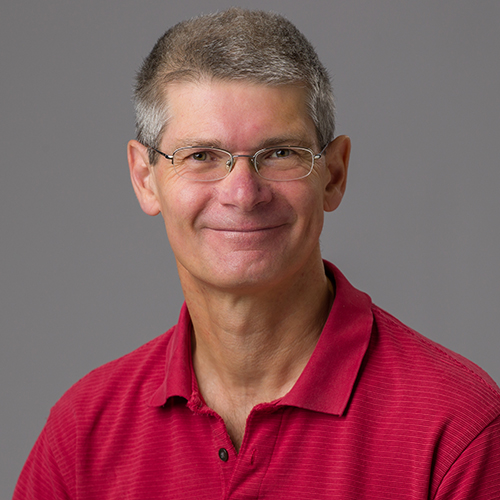
Daniel Bedford
Professor of Geography
Dr. Dan Bedford is a physical geographer and physical climatologist who works on climate change and community resilience. He earned both a PhD and master’s degrees in geography from the University of Colorado Boulder, after completing an undergraduate bachelor’s degree in geography from Oxford University in the United Kingdom.
At Weber State University, Dr. Bedford teaches courses focused on our physical world and the impacts humans are having on it, as well as preparing students to conduct and present their own independent research. His courses include:
- GEOG 1000: Planet Earth: Air, Water, Land and Life
- GEOG 3050: Weather and Climate: from daily storms to decades of drought
- GEOG 3090: Arctic and Alpine Environments
- GEOG 3590: Geography of Europe: the Land and People who Built a World Power
- GEOG 3780: Geographic Area Studies
- GEOG 3790: Research Methods in Geography
- GEOG 4990: Senior Seminar in Geography
Dr. Bedford has several research interests, but they share the underlying foundation of climate change. He has published work on the relationship between knowledge of, and attitudes towards, climate change, and is currently working with Ogden City officials on a multi-year project to explore how exposure to extreme heat varies between neighbourhoods. He is always eager to involve students in research projects, and has collaborated recently on urban heat island measurement, and a review of the climate resilience readiness of Ogden City.
Outside of work, Dr. Bedford enjoys music (both listening and playing), exploring the outdoors with his family, running trails either solo or with friends, and/or training for his next marathon. Or relaxing on the sofa with his cats.
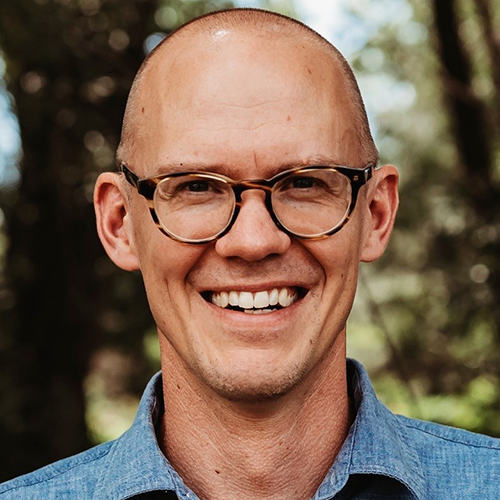
Jeremy Bryson
Geography Program Coordinator
Professor
Lindquist Hall, Room 361
jeremybryson@weber.edu
Jeremy Bryson
Professor of Geography
Jeremy Bryson is an urban geographer who studies how communities can thrive in a rapidly changing world. He earned his PhD in geography from Syracuse University and a master’s degree in earth sciences from Montana State University, after completing his undergraduate studies in urban planning at Brigham Young University.
At Weber State University, Dr. Bryson teaches courses that help students understand cities, regions, and the global systems that connect them, while also preparing them for careers in urban planning. His courses include:
- GEOG 1300: Exploring Global Geography: Places, People and the Planet
- GEOG 3210: Urban Geography: The How and Why of Cities
- GEOG 3500: Geography of Utah and the American West
- GEOG 4410: Sustainable Land Use Planning
Dr. Bryson’s research focuses on environment-society interactions in urban places, and he is passionate about involving undergraduate students in these projects. In recent years, he has collaborated with Weber State students on projects addressing important local issues, including efforts to protect dark night skies from light pollution, the growing challenge of urban wildfire smoke, and municipal strategies to help safeguard the Great Salt Lake.
When he isn’t on campus, Dr. Bryson is likely adding to his latest Wordle streak, creating maps and itineraries for his next city exploration, or continuing his multi-year project of listening to a new music album every day (he is always open to recommendations!). At home, he enjoys life with his family and their dog, cat, and chickens.

Ryan Frazier
Assistant Professor of Geography
Ryan Frazier is a geospatial scientist who studies how satellite imagery and spatial data can be applied to our changing world. He earned his PhD in forestry from the University of British Columbia and master’s degree in geographic information science and an undergraduate degree in geography from Clark University.
Dr. Frazier is interested in teaching students to utilize the power of geographic information science and remote sensing to convey information about landscapes, patterns and processes through maps and visualizations. In his courses students can expect to use spatial data to better understand their location on the map, how to collect, display, and refine mapping data to communicate ideas through maps. His courses include:
- GEOG 2400 and GEOG 4400: Cartography and Map Design
- GEO 1710 and GEO 3710: Introduction to Geographic Information Systems (GIS)
- GEO 3840: Remote Sensing: Principles and Methods
- GEOG 4600: Geospatial Programming and Online Methods
- GEO 4840 and GEOG 4840: Geospatial Internship
- GEO 4850 and GEOG 4850: Geospatial Capstone
Dr. Frazier’s research focuses on leveraging GIS and remote sensing to learn more about ecosystems, and specifically forests after wildfire. Dr. Frazier is certainly excited by new applications of GIS and remote sensing as well as a well constructed map, using non-parametric statistics, and time series of data. Many of Dr. Frazier’s efforts involve students taking part in his research work and presenting at conferences and meetings. In addition, Dr Frazier also serves as Co-Director of the NUGEOTEC - Northern Utah Geospatial Technology Education Program.
When Dr. Frazier is not teaching, mentoring, or examining data, you can likely find him at an ice rink coaching a youth team or playing in a senior league game himself. Books are a never ending source of information and entertainment for Dr. Frazier, and he encourages you to read or listen to a book or two this year!
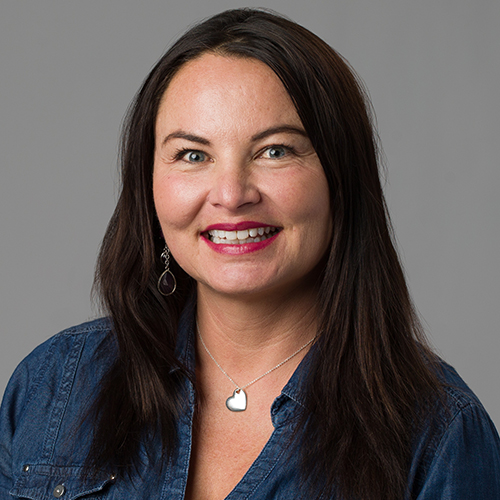
Maria Groves
Assistant Professor of Geography
Mariangelica (Maria) Groves is a paleoclimatologist who specifically looks at environmental change during the Anthropocene. She earned her PhD from the University of Utah after completing her master's degree at California State University Monterey Bay. She is originally from Colombia, South America and grew up in Virginia before completing her undergraduate degree in earth science at Penn State University.
She most enjoys sharing the great outdoors with students. This includes field courses that incorporate weather, climate, geology, and environmental change. You can often see her taking a group of students on field trips to the Colorado Plateau or local areas that exemplify the topics in her meteorology, climate change, arid lands, and national parks classes. She also welcomes students to work with her in the new Environmental Change Lab in Lindquist Hall where students can get experience with professional equipment to look at the evidence of natural and human influence such as fire, vegetation change, and soil chemistry.
In her spare time, she enjoys skiing, hiking, pilates, reading, listening to podcasts, going to concerts or traveling.
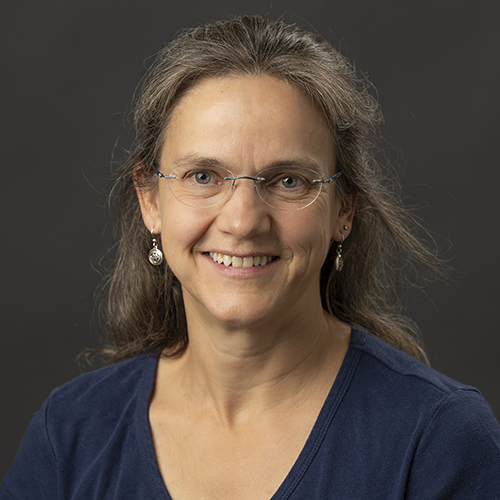
Alice Mulder
Associate Professor
Director of SPARC
Lindquist Hall, Room 364
801-626-6198
amulder@weber.edu
Alice Mulder
Associate Professor of Geography
Alice Mulder's academic and applied work focuses on the intersections of people and the environment, with a specific focus on sustainability and fostering a better world for all. She holds PhD and master’s degrees in geography from the University of Colorado Boulder. Prior to earning those degrees she worked for several years with an environmental consulting firm in New York State, donning steel toed boots, sampling groundwater and having her eyes opened to the impacts of prior land use. Her undergraduate degree in geography was also completed in New York at Vassar College.
Dr. Mulder strives to help students understand and care about the connectedness and interdependence of socio-economic systems with the natural environment, as well as their own position of power to shape both systemic and individual level impacts. She's also a firm believer in community-engaged learning and received the John A. Lindquist award in 2025. Her courses include:
- GEOG 4950 Capitol Reef Field Course: Sustainability and Public Lands
- GEOG 4920: Sustainability in Practice
- GEOG 3060 Environmental Issues: Local to Global Impacts & Solutions
- GEOG 1520 United States & Canada: Geography, Diversity and Change
In addition to teaching, Dr. Mulder is the director of the Sustainability Practices and Research Center on campus, which works to foster both sustainability education and practice on campus and in the wider community.
Off campus, she shares her home and recreational time with her husband and two kids, enjoying gardening, hiking, cross-country skiing, and observing the wonders of our natural world.
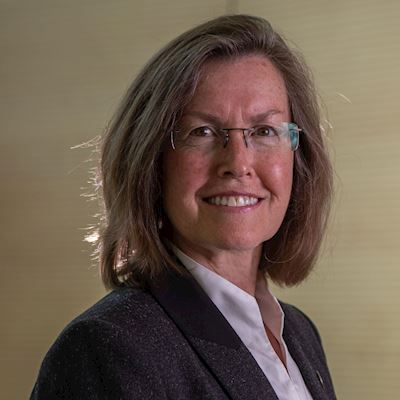
Julie Rich
Dean, College of Social Sciences & Education
Professor
Lindquist Hall, Room 161
jrich@weber.edu
Julie Rich
Dean, College of Social Sciences & Education
Dr. Julie Rich serves as the Dean of the College of Social Sciences & Education at Weber State University. With three decades of dedicated teaching under her belt at WSU, she transitioned to full-time administrative leadership in 2019 as Interim Dean, and by 2021, she was appointed Dean.
Rich has ventured through over 100 countries and resided abroad for more than eight years. Her commitment to experiential learning is demonstrated as she conducts high-impact, community-engaged initiatives for WSU students in countries like Rwanda, Mozambique, Uganda, Peru, Thailand, Ghana, and Fiji.
Rich has an undergraduate degree from Weber State, a master’s degree from the University of Utah, and a doctorate from the University of Oxford, England. Her scholarly contributions include peer-reviewed articles in journals such as Quaternary Science Reviews, Aeolian Research, Quaternary Research, and the Geological Society of America. Recognitions and accolades throughout her career include the H. Aldous Dixon Award, Hemingway Faculty Excellence Award, Hemingway Collaborative Awards, Red Cross International Hero, John A. Lindquist Award, Crystal Crest Master Teacher, and the Gwen Williams Prize.
Sociology Faculty
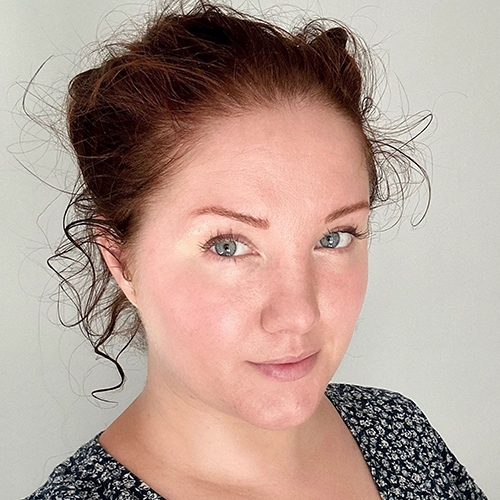
Anna Gabur
Assistant Professor of Sociology
PhD, Notre Dame, 2024
MA, Notre Dame, 2020
MA, “Ion Creanga” Pedagogical State University of Moldova, 2015
BA, “Ion Creanga” Pedagogical State University of Moldova, 2012
Anna Gabur is a sociologist of health, emotions, networks, and culture. Her research examines social constructs of well-being and pain, as well as narratives that people use to make sense of emotions and relationships.
She uses mixed methods including interviews, experiments, social network analysis and statistical analysis. Her current book project explores how people share pain and joy with their confidants and how those practices affect wellbeing.
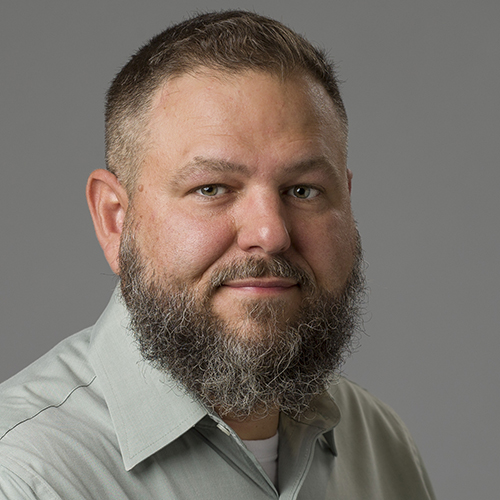
Pepper Glass
Professor of Sociology
An ethnographer and qualitative researcher, Pepper Glass’s teaching and scholarly interests include the topics of deviance, social psychology, social movements, race and ethnicity and urban studies.
He is currently researching the effects of immigration and the shifting racial color line on Ogden, Utah.
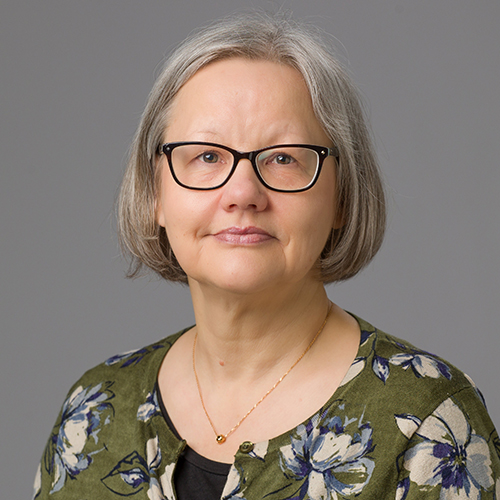
Marjukka Ollilainen
Professor of Sociology
PhD, Sociology, Virginia Tech, 1999
MA, Political Science, Virginia Tech, 1992
MSocSc, Journalism and Mass Communication, University of Tampere, Finland, 1991
Marjukka Ollilainen teaches Introduction to Sociology, Classical and Contemporary Social Theory and courses in Sociology of Gender, Work, Organizations and Consumerism. Her research explores the intersection of gender, work and organizations and appears in Advances in Gender Research, Gender & Society, Economic and Industrial Democracy and Research in the Sociology of Work. She is currently studying work-life issues in academia in the United States and Finland.
Staff
Adjunct Faculty
Terry Allen
Sociology
terryallen3@weber.edu
Abby Baka
Anthropology
abbybaka@weber.edu
Shawn Carlyle
Anthropology
shawncarlyle@weber.edu
Tricia Cook
Geography
triciacook@weber.edu
Katryn Davis
Anthropology
katryndavis@weber.edu
Deborah Graham
Anthropology
deborahgraham@weber.edu
Tasha Iglesias
Sociology
tashaiglesias@weber.edu
Rusty Keele
Anthropology
rustykeele@weber.edu
Rob Line
Sociology
charlesline@weber.edu
Kimberly Love
Sociology
kimberlylove@weber.edu
Kare McManama-Kearin
Anthropology
karekearin@weber.edu
Christopher Merritt
Anthropology
cmerritt@weber.edu
Angela Montague
Anthropology
angelamontague@weber.edu
Jesse Morris
Geography
jessemorris@weber.edu
Joshua Mueller
Geography
joshuamueller@weber.edu
Rebecca Richards-Steed
Geography
rebeccarichards@weber.edu
Greg Richens
Sociology
gregrichens@weber.edu
Mark Simpson
Sociology
msimpson@weber.edu
Chris Wilson
Sociology
christinawilson@weber.edu
Shauna Wolfgram
Geography
shaunawolfgram@weber.edu
Emeritus Faculty
Brooke S. Arkush
barkush@weber.edu
Rosemary Conover
rconover@weber.edu
Bryan Dorsey
bdorsey@weber.edu
Harold Elliott
helliott@weber.edu
Eric Ewert
eewert@weber.edu
Francis Harrold
francisharold@weber.edu
Carla Trentelman
carlatrentelman@weber.edu