Information
Technology

Annual Report 2025 ‑ 2026




CIO & Associate Vice President Message
Facts & Figures
Adobe Creative Campus
792
Acrobat Sign Licenses
1,659
Creative Cloud Licenses
Faculty / Staff
5,694
Creative Cloud Licenses
Students
65,610
Adobe Express Licenses
Available to All WSU Students, Faculty, and Staff
University IT Support Desk
4,223
Total Available Hours
6,339
Duo Support Tickets
1,496
Wi-Fi Support Tickets
1,269
Email Support Tickets
Computer Labs Data
52,452
Total Logins
5,739
Total Unique Users
Projects
-
3D Printing for Faculty & Student Success
-
Disability Services Accommodate Integration
IT partnered with Disability Services to enhance student support by upgrading the Accommodate platform and integrating it with the university's Banner student information system. The project included implementing Single Sign-On (SSO) for a secure, seamless user experience and developing two automated data feeds to provide Accommodate with the student and academic information needed by Disability Services.
By replacing manual data entry with automated system integrations, the project improves data accuracy, reduces administrative effort, and provides Disability Services with more timely access to critical information. The integration also strengthens system security and creates a more efficient experience for both students and staff.
Business Impact: Streamlined the administration of student accommodations through automated data integration, improved data accuracy and system security, and enabled Disability Services to provide more efficient and timely support to students.

The Banner integration has been a valuable enhancement to our office’s existing processes. The automated data feeds keep student information current, while expanded self-service features allow students to access accommodation information and services more efficiently and independently. The integration has reduced administrative steps and supported more streamlined tracking of accommodation requests.
- Sarah Doying,
Interim Director of Disability Services -
Expanding Campus Storytelling Through Innovation
-
Early College Application Automation
IT modernized the student application process by replacing a time-intensive manual workflow with a more efficient automated solution. The project included designing and deploying a new application to streamline the processing of Early College applicants, with the potential to incorporate an electronic Parent Consent Form into the workflow.
The project also introduced a new collaborative development model for the Enterprise Applications Student Team. Rather than assigning the full development lifecycle to a single student developer, team members worked together across planning, design, development, testing, and deployment. this hybrid approach allowed students to contribute their individual strengths while building shared knowledge, strengthening teamwork, and gaining valuable real-world experience in collaborative software development.
By automating key steps in the application process, the new solution reduces manual effort, improves consistency and accuracy, and creates a more efficient experience for both applicants and administrative staff. The automation significantly reduces manual processing, enabling staff to focus on higher-value work while improving the efficiency and timeliness of application processing.
Business Impact: Streamlined the Early College application process through automation, reduced manual processing, improved consistency and the applicant experience, and provided Enterprise Student Applications employees with meaningful experience working in a collaborative software development approach.

The creation of the Early College application system by the Enterprise Student Applications Team has been instrumental in streamlining what was once a complicated multi-system process. Having a single application that incorporates all processes into a single platform eliminated barriers for both students and Weber State Early College advisors. Truly, the quality of work has increased in the Early College program because of this.
- Richard Leary,
Director of Advising & Outreach -
Graduate Programs Website Redesign
As part of a multi-year initiative to strengthen Weber State University's digital presence, the Website Design & Development team partnered with Marketing and Communications and academic stakeholders to redesign and launch modern websites for the university's graduate programs. The initiative focused on creating a more consistent, accessible, and user-centered experience that better supports prospective graduate students throughout their decision-making journey.
During the 2025-2026 academic year, the Website Design & Development team launched redesigned websites for the following programs:
- Master of Science in Athletic Training
- Master of Science in Data Science
- Master of Science in Radiologic Sciences
- Master of Health Administration
- Master of Science in Nursing
- Doctor of Nursing Practice
The redesigned websites feature improved navigation, streamlined content, responsive design, and alignment with university branding and accessibility standards. By making program information easier to find and understand, the new sites help prospective students explore graduate education opportunities, compare programs, and connect with the resources needed to take the next step in their academic journey.
Business impact: Enhanced the online experience for prospective graduate students, improved consistency across graduate program websites, strengthened recruitment efforts, and reinforced Weber State University's digital brand and accessibility.
-
Supporting Recruitment & Future Wildcats
-
Nursing Program Website Redesign
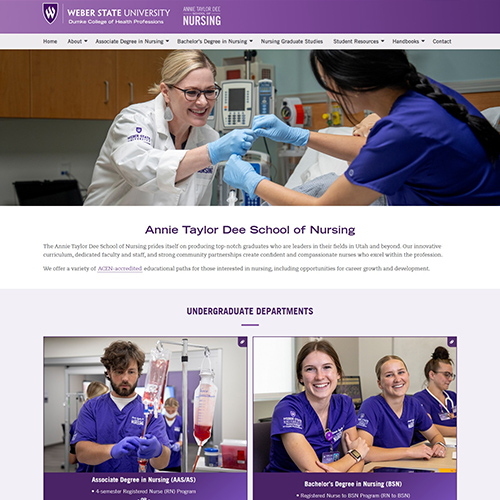 The Nursing Program Website Redesign was one of the Website Design & Development team's largest and most comprehensive digital initiatives. In close partnership with Marketing and Communications and Nursing Program stakeholders, the team completely redeveloped the website to better serve prospective students, current Wildcats, faculty, staff, and the broader Weber State community.
The project focused on delivering a modern, accessible, and user-centered digital experience with improved navigation, streamlined content, and clearer access to academic programs, resources, and student information. The redesigned site also aligns with university branding and digital accessibility standards, creating a more consistent and engaging experience across devices.
Through extensive cross-campus collaboration, the Website Design & Development team delivered a digital experience that supports the Nursing Program's recruitment, communication, and student success goals while making it easier for users to find the information and resources they need.
Business Impact: Modernized one of Weber State's largest academic program websites, improved accessibility and usability, strengthened recruitment and communication efforts, and created a cohesive digital experience that better supports prospective students, current students, faculty, staff, and community stakeholders.
-
WSU Homepage Redesign
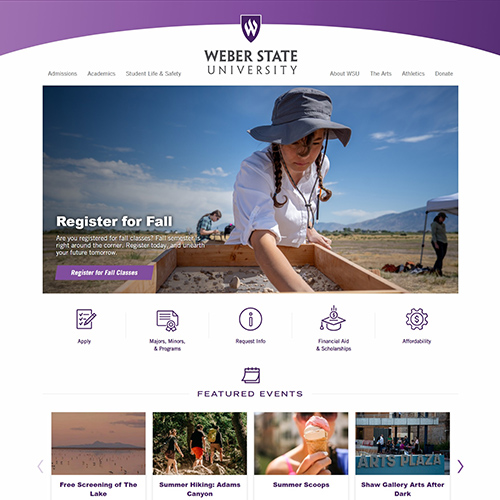 The WSU Homepage Redesign was a major collaborative initiative led by the Web Development, Marketing and Communications, and Website Design & Development teams to reimagine Weber State University's primary web presence. The project included a complete redesign of the university's homepage, along with updated template headers and footers implemented across the Weber State's broader web environment.
The redesigned homepage provides a modern, intuitive, and accessible user experience while strengthening the university's brand identity and supporting strategic communication goals. Through close collaboration across multiple departments, the project created a more cohesive digital experience for prospective students, current Wildcats, faculty, staff, alumni, and the broader community.
Improvements to navigation, usability, accessibility, and visual consistency make it easier for visitors to find information, explore university resources, and connect with Weber State. The redesigned homepage also provides a stronger digital foundation for recruitment, student engagement, and institutional communication.
Business Impact: Modernized Weber State's primary web presence, improved navigation and accessibility, strengthened brand consistency across the university website, and created a more engaging digital experience that supports recruitment, student success, and institutional engagement.
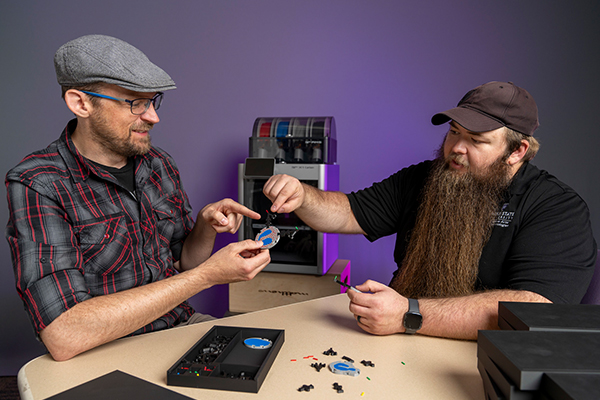 IT's commitment to supporting faculty innovation reached an exciting new milestone through a collaboration with Dr. Olof Nilsson in Microbiology. The partnership explored how 3D printing could help students better understand one of the more challenging concepts in immunology (MICR 3254).
 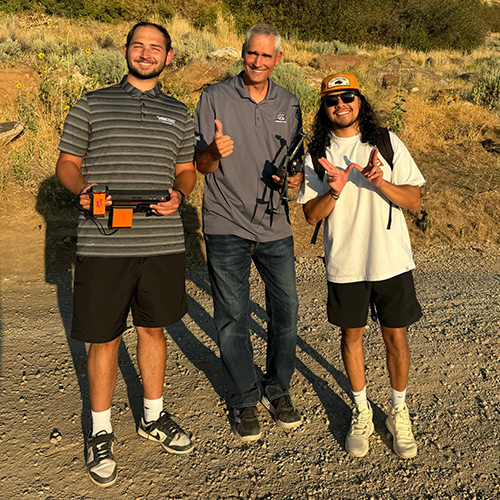 This year, the CATS team expanded the ways Weber State captures and shares campus experiences, using new technology to strengthen school spirit, celebrate university traditions, and support campus initiatives.
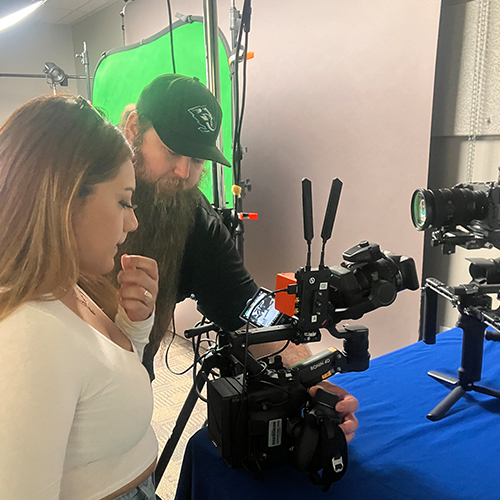 This past year, the CATS team used its production expertise and emerging media technologies to support university recruitment and inspire future Wildcats.
Community Engagement
Weber State University AI Hackathon
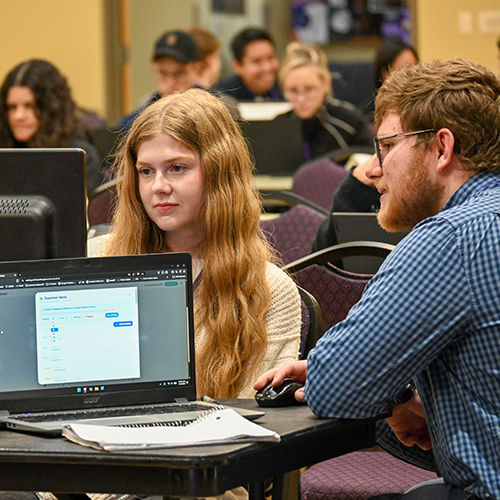
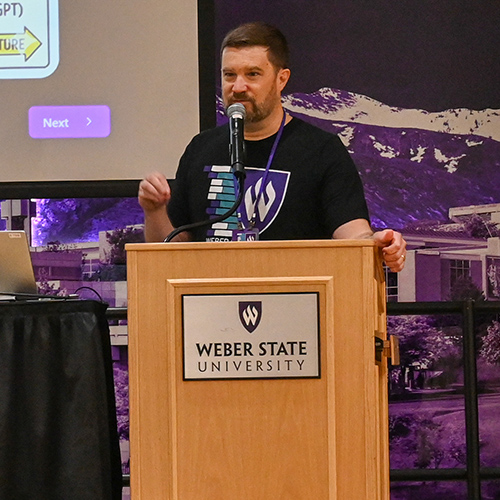
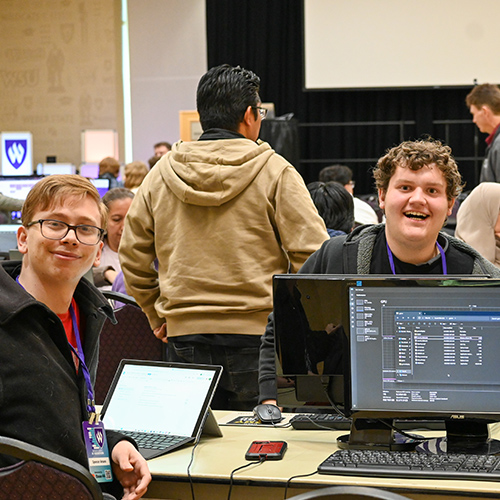
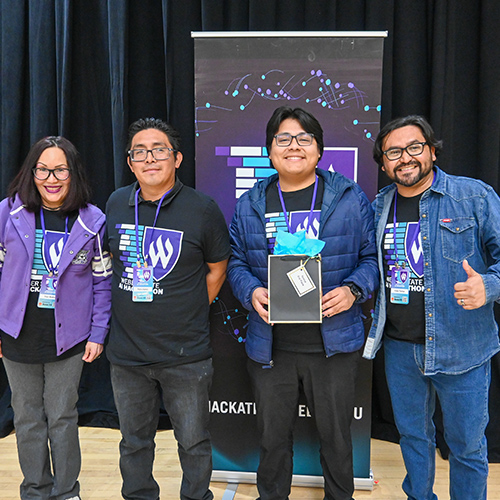
On April 4, 2026, Weber State hosted its annual AI Hackathon in the Shepherd Union Building. The 2026 event leveled up by introducing a hybrid event. This included a two-week remote development phase followed by a vibrant, on-site finale. The result was an environment where participants could turn complex ideas into functional applications without the burnout of a traditional one-day hackathon.
The event was a success, largely thanks to a newly established core planning team that streamlined logistics and communication. The extended timeframe led to a noticeable jump in project quality. From university-focused utilities to creative AI experiments, the projects showcased not just coding skills, but problem-solving and application design at a professional level, earning praise from the industry judges on-site.
Feedback from attendees was overwhelmingly positive, with many citing the networking opportunities and detailed judge feedback as key highlights. Surveys confirmed the educational impact of the event, as 50% of participants reported feeling significantly more confident in their ability to build AI-powered software following the hackathon. With over 120 people in attendance, including students, faculty, and industry professionals, the event solidified its role as a premier regional technology experience for the university.
Looking ahead, the hackathon has secured its place as a sustainable fixture in the university calendar. Through aggressive corporate outreach and strategic planning, the team successfully raised $13,500 in sponsorships, creating a healthy reserve fund that fully guarantees the event's return in 2027. With operational lessons already guiding plans for a mid-March date next year, WSU Information Technology is ready to continue driving innovation and fostering the next generation of IT talent.
Ken Garff Regional High School
Esports Tournament at WSU
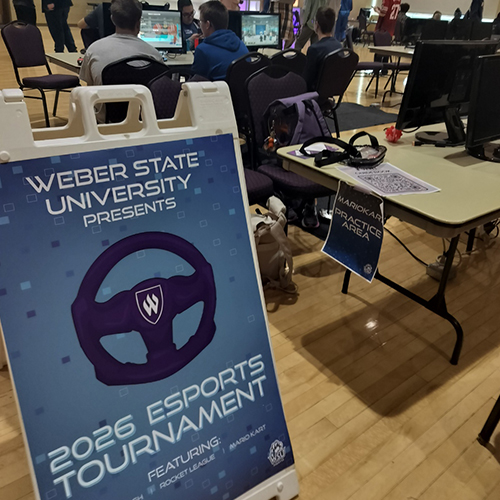
Weber State University hosted another successful esports tournament for the 4th year in a row. Tim Chapman, his Student Technology Assistants, Tyler Cardon, Mark Ashby, Kait Viator, and Kristy Harmon from TSS collaborated with Morgan Fradley in Campus Recreation for this year’s tournament due to restructuring of the esports program. This greatly benefited the quality of our programming and our inclusion of more campus resources.
This year’s tournament’s theme was Safe Driving because January is Teen Driving Safety Awareness Month and Safe UT shared life-saving driving tips with the teams. We also had 16 Weber State departments and programs participate in tabling outside the ballrooms so students could be entered to win prizes by learning about Weber’s great resources.
21 high school esports teams from across Utah packed the Shepherd Union Ballrooms to compete in Rocket League™, Super Smash Brothers™, and MarioKart™. 234 students registered and attended with their coaches, advisors, and families to cheer on their teams to win the championship title and receive $1,000 tuition waivers to Weber State. Daniel Killcrease and Ali Threet were both our keynote speakers to engage with potential future Wildcats.
Did You Know?
Asana Helps Campus Teams Work Smarter
Weber State University offers Asana Enterprise+ to help campus teams organize projects, coordinate work, and collaborate more effectively. Over the past year, the number of Asana users across campus has continued to grow as departments discover new ways to manage initiatives, track deadlines, clarify responsibilities, and improve visibility into their work.
For $290 per user annually, departments gain access to a centralized work-management platform that supports everything from individual task tracking to complex, cross-functional projects.
Asana can help reduce reliance on scattered emails, spreadsheets, and meeting notes by creating a shared source of information. Whether your department is managing events, operational processes, strategic initiatives, or recurring work, Asana provides a flexible structure that adapts to your needs.

Asana has been a game changer for Resource Sharing Services as we set up workflows for long-term projects, recurring tasks, and projects involving multiple people. The ability to schedule and track completion of tasks has been helpful in managing staff workload. We have also begun setting up forms and workflows for projects that benefit multiple library departments, not just our own. One of the most impactful areas Asana has helped improve efficiency in is our OER Grant workflow process. We can now reliably manage marketing, applications & review, onboarding & training, and final deadlines for each unique grant project.
- Andrew Stapley,
Open Educational Resources Coordinator

The Division of Online and Continuing Education has about 80 employees who use Asana daily to manage tasks, timelines, communication, and due dates for many projects within our division. Asana is a great tool that tracks all of our program development processes, project tasks, and more! With Asana's ability to enable cross-team collaboration on projects, it keeps colleagues up to date on project status. We even have some folks who have advanced their knowledge of Asana, explored the forms feature, created automated rules, and set up templates that allow us to streamline tasks, automate processes, and connect the dots across many colleagues and various projects! We depend on Asana for many of our program development and project management needs!
- Debbie Hansen,
Executive Director of DOCE Operations