
Full-Dome Shows at the Ott Planetarium
We have a wide range of shows available for reservations or during open hours upon request. Please contact planetarium@weber.edu with specific questions!
Popular Shows
-
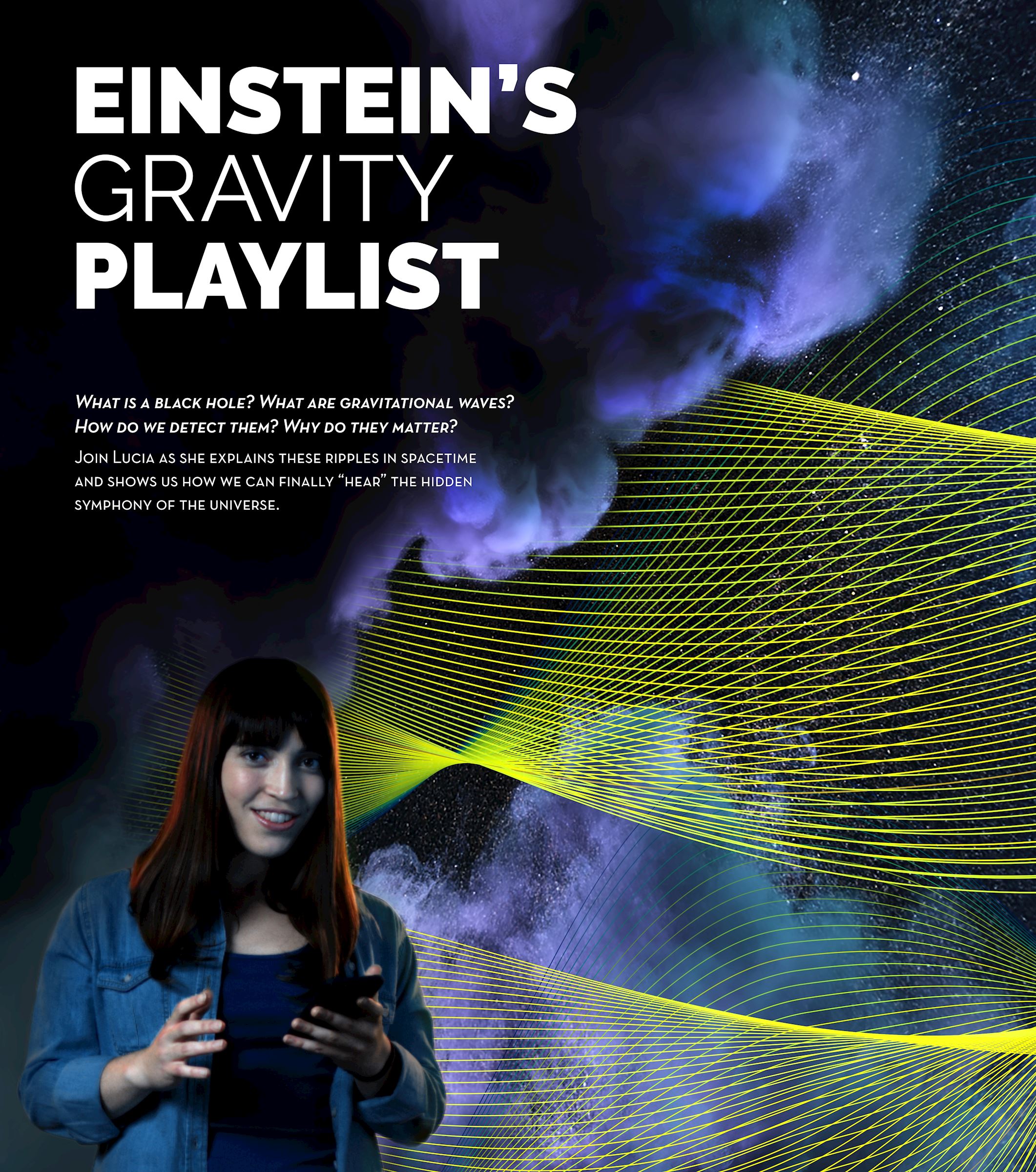
Einstein's Gravity Playlist | Ages 14+
23 Minutes
Einstein’s Gravity Playlist is an original planetarium show that explores the ripples in space-time known as gravitational waves. Albert Einstein first predicted the existence of gravitational waves in 1916, and a century later, scientists detected these waves using incredibly precise laser technology here on Earth. In honor of this long-anticipated detection, the scientists who created the Laser Interferometer Gravitational-Wave Observatory (LIGO) won the Nobel Prize in Physics in 2017. In this show, viewers follow Lucia, a PhD student in physics, as she explores how gravitational waves are formed, how they travel through the universe, and how scientists like her work to detect them.
-
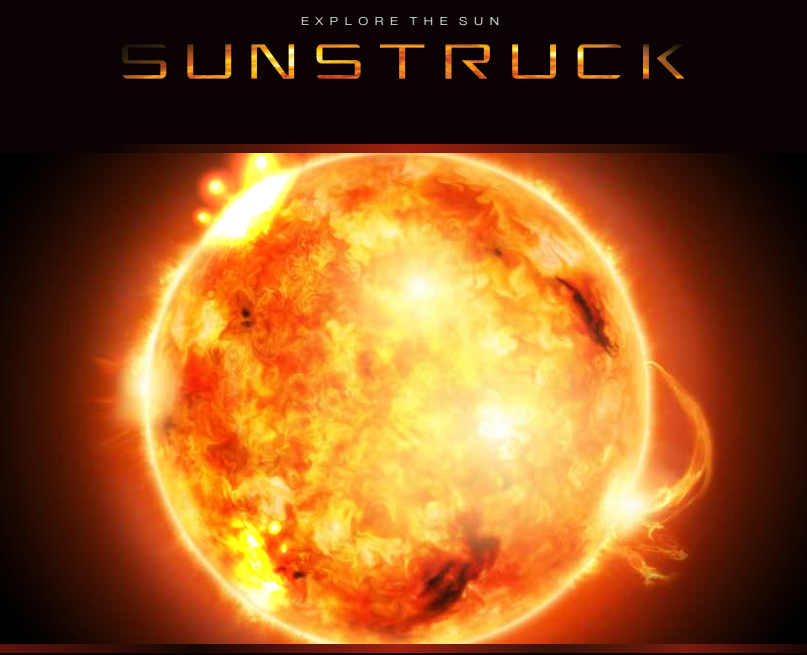
Sunstruck | Ages 8+
21 Minutes
Explore the sun in all its glory in this planetarium show. Sunstruck takes us on a journey to discover the wonders of our magnificent sun and investigate how our star has supported life on Earth for millennia. Travel back in time to experience the birth of our Sun and solar system. Discover how the Sun came to support life, how it threatens life as we know it, and how its energy will one day fade away.
-
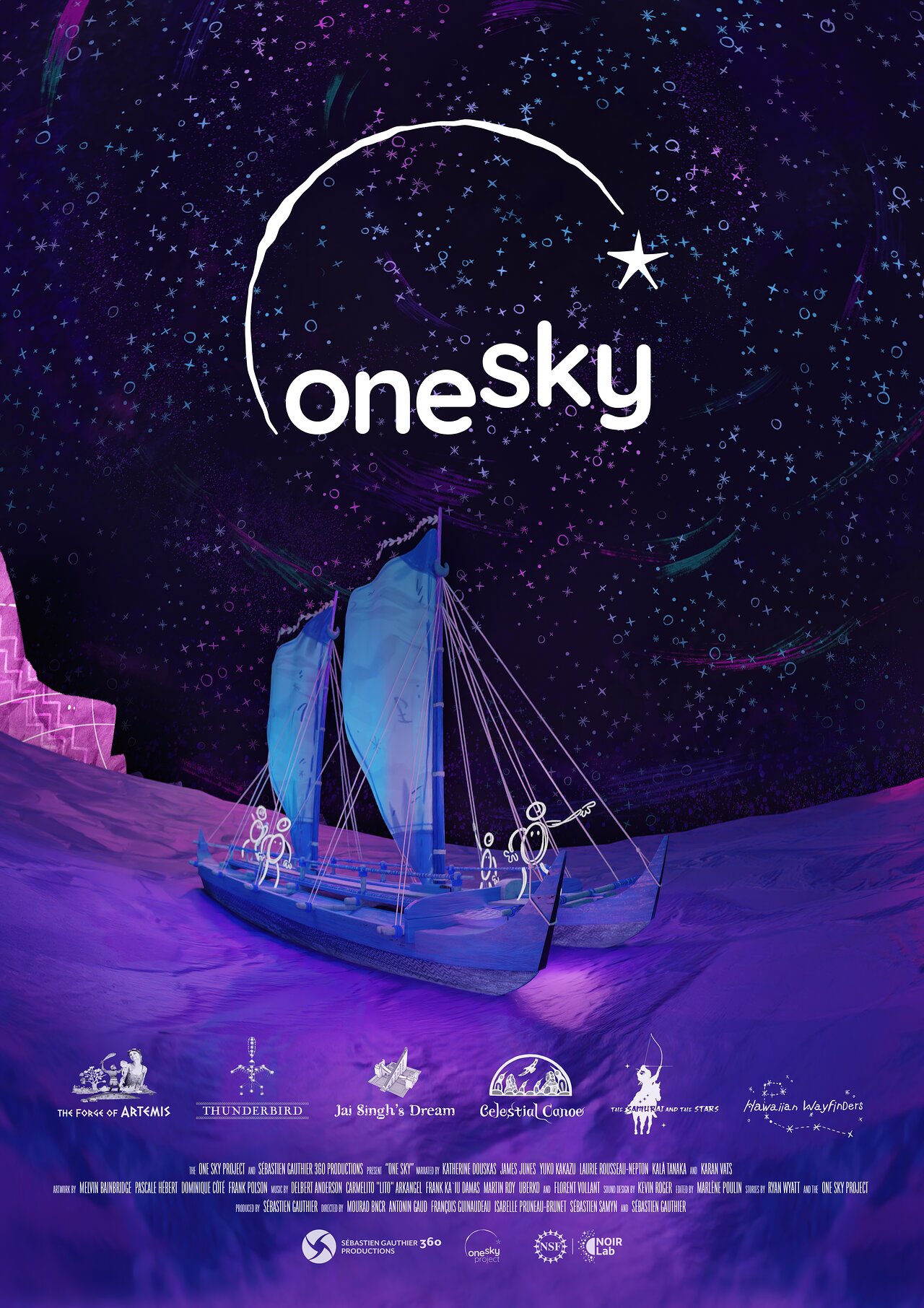
One Sky | Suitable for All Ages
43 Minutes
One Sky, a series of seven captivating short films, highlights cultural and Indigenous perspectives of the night sky. The One Sky Project is an international collaboration focused on understanding Indigenous astronomy through culturally authentic storytellers and on how, under one sky, we are all connected.
-
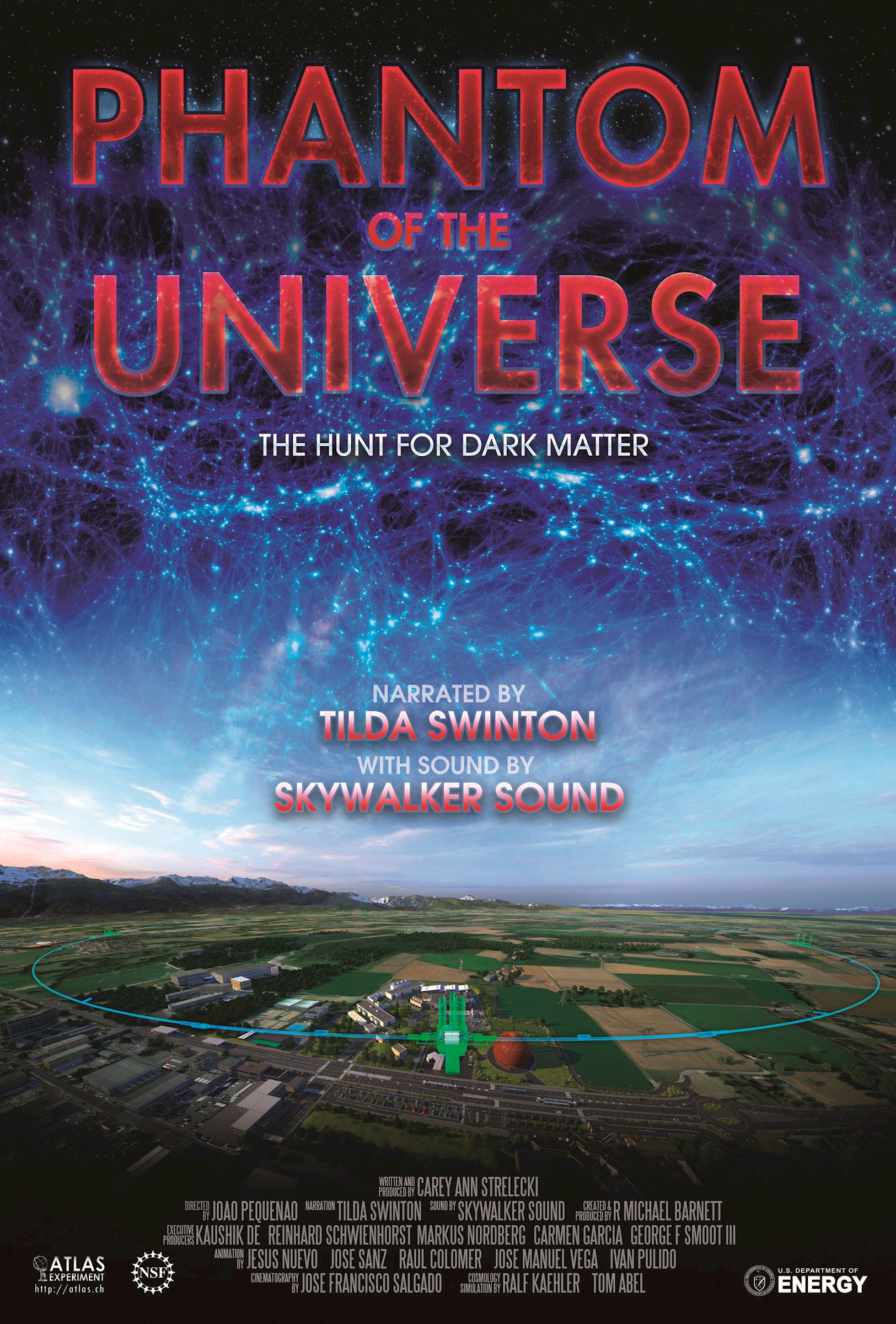
Phantom Of The Universe: The Hunt For Dark Matter | Ages 8+
27 Minutes
Phantom of the Universe is an exciting exploration of dark matter, from the Big Bang to its anticipated discovery at the Large Hadron Collider. The show will reveal the first hints of its existence through the eyes of Fritz Zwicky, the scientist who coined the term "dark matter." It describes the astral choreography witnessed by Vera Rubin in the Andromeda galaxy, then plunges deep underground to visit the most sensitive dark matter detector on Earth, housed in a former gold mine. From there, it journeys across space and time to the Large Hadron Collider at CERN, speeding alongside particles before they collide in visually stunning explosions of light and sound, while learning how scientists around the world are collaborating to track down the constituents of dark matter.
-
Two Small Pieces of Glass | Ages 8+
22 Minutes
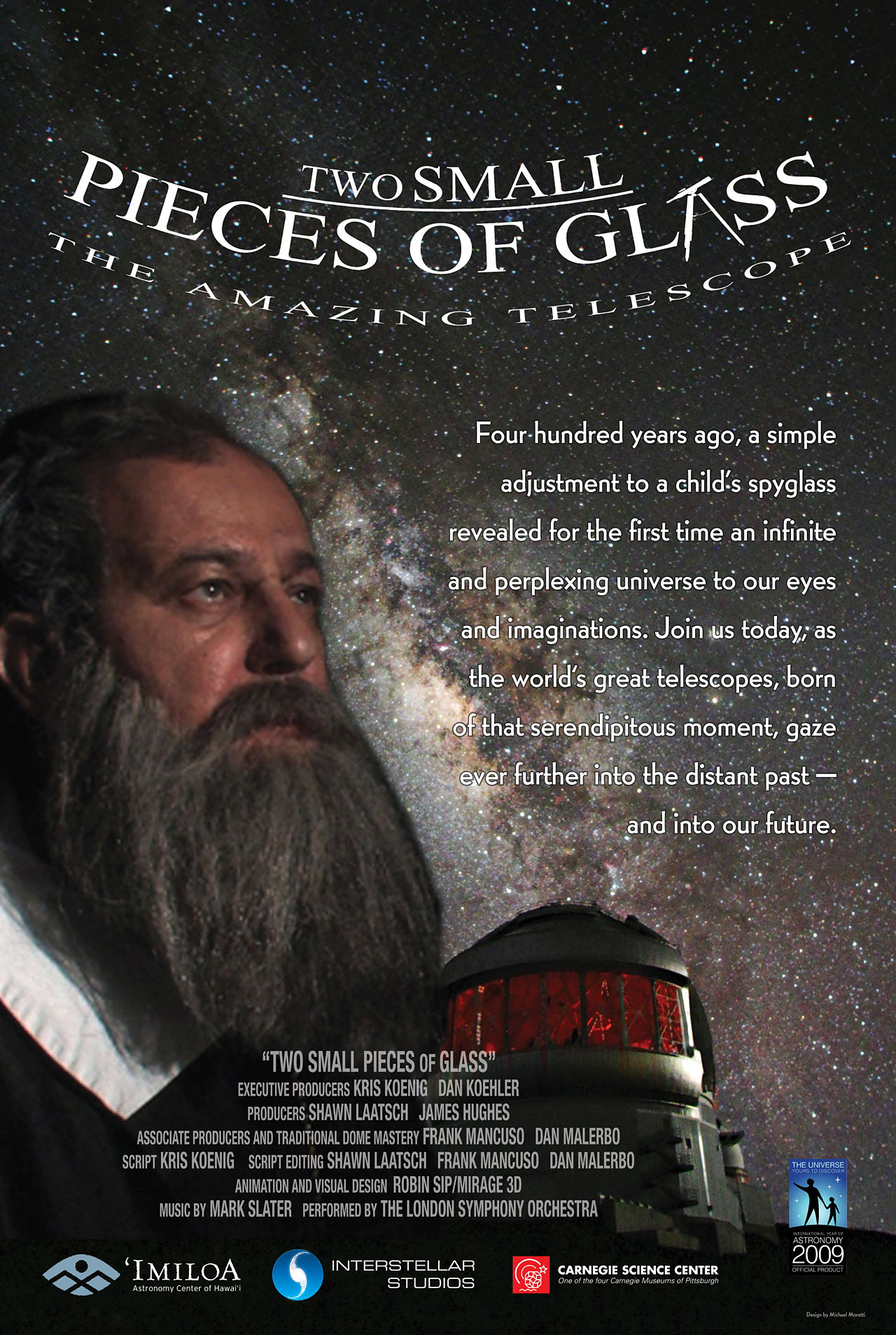
We follow two students as they interact with an astronomer at a local star party. Along the way, the students learn the history of the telescope from Galileo's modifications to a child's spyglass — using two small pieces of glass — to the launch of the NASA/ESA Hubble Space Telescope and the future of astronomy. Aiming to engage and appeal to audiences of all ages, the show explores the wonder and discovery made by astronomers throughout the last 400 years.
-
Seeing! A Photon's Journey | Ages 14+
27 Minutes
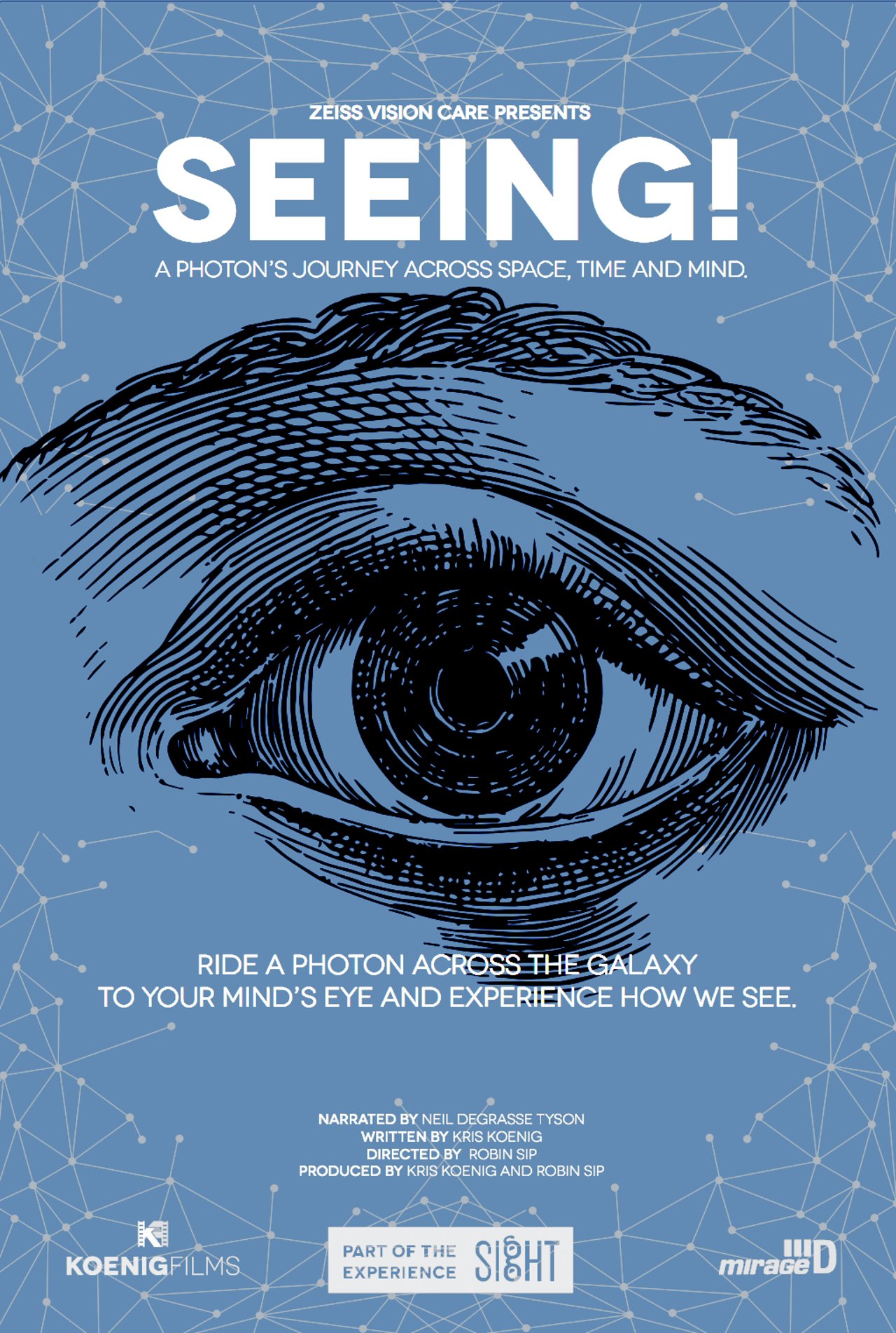
Follow the journey of a single photon as it is produced in a distant star, before traveling across the vast expanse of space to land on someone's retina. This full-dome planetarium show explores some of the fascinating processes of the cosmos. From ZEISS, the show is narrated by astronomer and science communicator, Neil deGrasse Tyson.
-
Waiting Far Away | Suitable for All Ages
11 Minutes
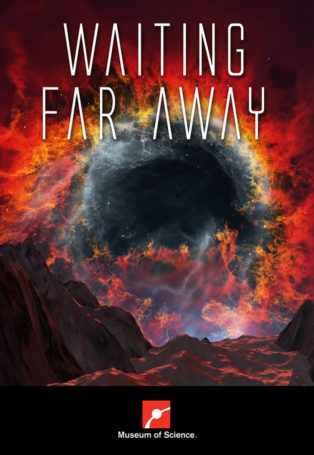
An explorer of the cosmos has traveled too far… And can’t find home. Follow in the footsteps of a cosmic traveler as he shares a wild story.
-
This is Our Sky | Ages 3+
21 Minutes
Join Luna and her friends for an exploration of the sky, which includes phases of the Moon, seasons, constellations, and planets. This is Our Sky! is a general astronomy show that contains elements of interest spanning a wide range of topics for young audiences.
-
Big Astronomy (Available in English and Spanish) | Ages 8+
27 Minutes
Journey to three world-class observatories in Chile's rugged Andes Mountains and arid Atacama Desert— remote, extreme regions that happen to have the perfect conditions for astronomical research. Along the way, you'll meet an inspiring cast of astronomers, engineers, technicians, and support staff who keep these mega-machines running.
-
SDSS-V: Mapping the Hidden Universe (Available in English and Spanish) | Suitable for All Ages
10 Minutes
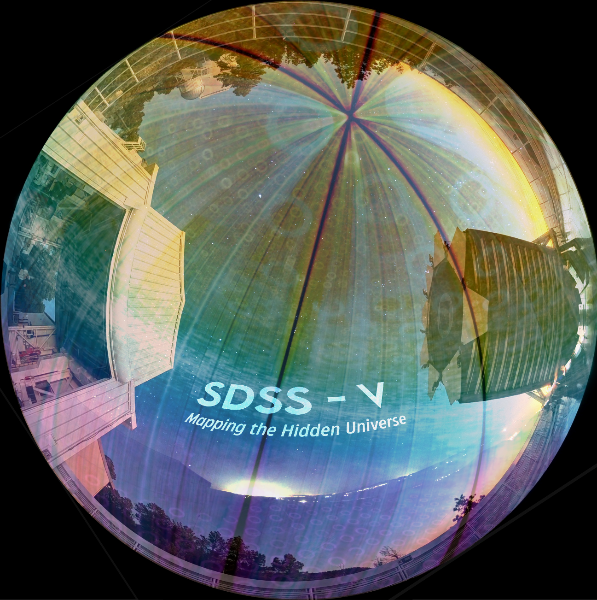
Mapping the Hidden Universe takes viewers from Apache Point Observatory in New Mexico to Las Campanas Observatory in Chile, revealing how telescopes capture starlight each night. The film shows how breaking light down into its component rainbow of color wavelengths allows astronomers to unlock cosmic secrets, measure distances to stars, and uncover the makeup of distant objects.
-
Additional Shows
Dark Matter Mystery | Ages 10+
38 Minutes
What keeps galaxies together? What are the building blocks of the Universe? What makes the Universe look the way it looks today? Researchers all around the world try to answer these questions. We know today that approximately a quarter of the Universe is filled with a mysterious glue: Dark Matter. We know that it is out there. But we have no idea what it is made out of.
5000 Eyes: Mapping the Universe with DESI | Ages 8+
23 Minutes
5000 Eyes: Mapping the Universe with DESI is a full-dome film about the Dark Energy Spectroscopic Instrument (DESI), which is creating the most detailed map of our nearby universe by measuring the spectra of many galaxies at once. Experience the largest structures in the universe as never seen before by flying through a portion of DESI's initial data. Dive into modern cosmology, plus the scientific background and motivation for building a large map of galaxies. And take a trip to Kitt Peak to see footage of the telescope in action while getting to know the amazing people from all over the world who make this research possible.
Messengers of Time and Space | Ages 10+
29 Minutes
Messengers of Time and Space highlights how Gemini will work with observatories, such as the Rubin Observatory, that monitor the night sky for exciting astronomical events that change over time. Sometimes, light is not the only indicator of these short-term events. Audiences will learn how information can reach us through messengers such as cosmic rays, elusive particles called neutrinos, and even gravitational waves rippling through the Universe.
Supermassive Black Holes: Uncovering the Invisible | Ages 8+
21 Minutes
Leading scientists in observational and theoretical studies of black holes and galaxies, industrial experts in cutting-edge big technologies, and professionals in science dissemination have been brought together to set up research projects which will combine the latest state-of-the-art observations, numerical simulations, and innovative analytic tools to compare theory with observation, and shed light on the physics of black hole formation in the context of galaxy evolution. This planetarium show presents the environments of black holes in an impressive and understandable way to the audience.
Mars: The Ultimate Voyage | Ages 8+
25 Minutes
On a two-year journey to Mars, astronauts will face extraordinary challenges—long distance, a closed environment, isolation, altered gravity, and radiation. What will it take to get astronauts to Mars—and back—safely? This new, animated planetarium production highlights NASA research and training initiatives that are preparing the next generation of astronauts who will head to Mars. The film shows how creativity, collaboration, communication, and expertise in a diverse number of fields are key to the success of deep space travel—while also inspiring the next generation of STEM professionals! Witness what it takes to embark on the first human mission beyond Earth’s orbit.
The Bell Museum collaborated with NASA and the UNC Morehead Planetarium and Science Center to create this new planetarium show. The work was funded by a NASA Teams Engaging Affiliated Museums and Informal Institutions (TEAM II) Award 80NSSC20M0028 to the Bell Museum through the Regents of the University of Minnesota.
Dark Side of Light | Ages 8+
22 Minutes
For several centuries, we have become accustomed to lighting up artificial light sources after dark, considering them natural. But it’s not. Living organisms, both plants and animals, have adapted to the natural cycle of day and night for tens of millions of years. Our biorhythms work in accordance with sunrise and sunset. The artificial disruption of this cycle has serious consequences, not only for our health but also for the environment and the economy. So why is the increasing level of artificial lighting dangerous for us? Let's take a look together at what lies beneath the term "light pollution" and what each of us can do about it.
From The Earth to the Universe | Ages 8+
31 Minutes
The night sky, both beautiful and mysterious, has been the subject of campfire stories, ancient myths, and awe for as long as there have been people. A desire to comprehend the Universe may well be humanity's oldest shared intellectual experience. Yet only recently have we truly begun to grasp our place in the vast cosmos. To learn about this journey of celestial discovery, from the theories of ancient Greek astronomers to today's grandest telescopes, we invite you to experience "From Earth to the Universe." This stunning, 30-minute voyage through space and time conveys, through sparkling sights and sounds, the Universe revealed to us by science. Viewers can revel in the splendor of the worlds in the Solar System and our scorching Sun. From Earth to the Universe takes the audience out to the colorful birthplaces and burial grounds of stars, and still further out beyond the Milky Way to the unimaginable immensity of myriad galaxies.
The Sun, Our Living Star (Available in English and Spanish) | Ages 8+
24 Minutes
The Sun has shone on our world for four and a half billion years. The light that warms our skin today has been felt by every person who has ever lived. It is our nearest star and our planet's powerhouse, the source of the energy that drives our winds, our weather, and all life. The passage of the Sun's fiery disc across the sky — day by day, month by month — was the only way to keep track of time for countless past civilizations. Don't be fooled by the terminology; although it is a typical dwarf star, the Sun consumes 600 million tons of hydrogen each second and is 500 times as massive as all the planets combined.
Journey to the Center of the Milky Way | Ages 8+
7 Minutes
What lies at the heart of our galaxy? For twenty years, ESO's Very Large Telescope and the Keck telescopes have observed the center of the Galaxy, tracking the motions of more than a hundred stars and identifying the position of an otherwise invisible object — the supermassive black hole at the center of our galaxy. Embark on a Journey to the Center of the Milky Way and, during seven minutes, travel faster than light, from the driest place on Earth, the Atacama Desert in Chile, right to the center of our own galaxy, where a black hole is consuming anything that strays into its path.
Out There | Ages 6+
30 Minutes
For thousands of years, mankind thought that the Earth was the center of the Universe. Thanks to our curiosity, imagination, and urge to explore, we now know that planets like our Earth are nothing special in the cosmos. The Sun is just one ordinary star among hundreds of billions in our galaxy, the Milky Way. With the world's most powerful telescopes, we can explore more and more of the Universe. Most stars have planets — it turns out they are more common than we thought. A huge diversity of different worlds is out there, just waiting to be discovered.
Sunset Meditation | Suitable for All Ages
25 Minutes
A guided meditation experience where you’ll travel from the Grand Canyon to the North Pole, relaxing under a serene sunset and the night sky.