



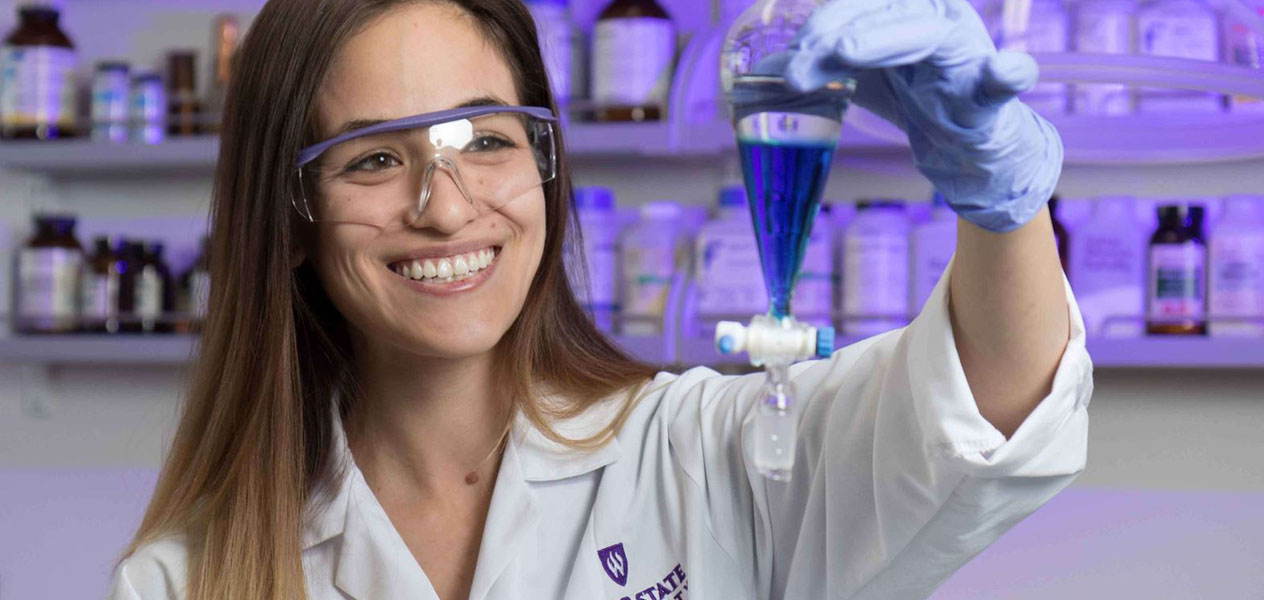



Studying Chemistry at Weber State
Weber State’s chemistry program offers you the skills and experience to help solve many of the world’s problems as an expert in the composition, structure and properties of substances. Whether you are pursing a chemisty, biochemistry, chemistry teaching, or a chem tech degree, you will be equipped with a deep understanding of the chemical basis of matter, in combination with current hands-on practical laboratory skills in a personalized and accessible learning environment.
Chemistry Highlights
Weber State’s chemistry and biochemistry bachelor's degrees are certified by the American Chemical Society.
While earning your chemistry degree, you can participate in research opportunities or internships that allow you to apply your knowledge of chemistry to real-world problems.

Beyond the Classroom
Weber State chemistry majors often gain work experience in WSU’s chemistry stockroom, as university lab assistants or in off-campus chemistry jobs.